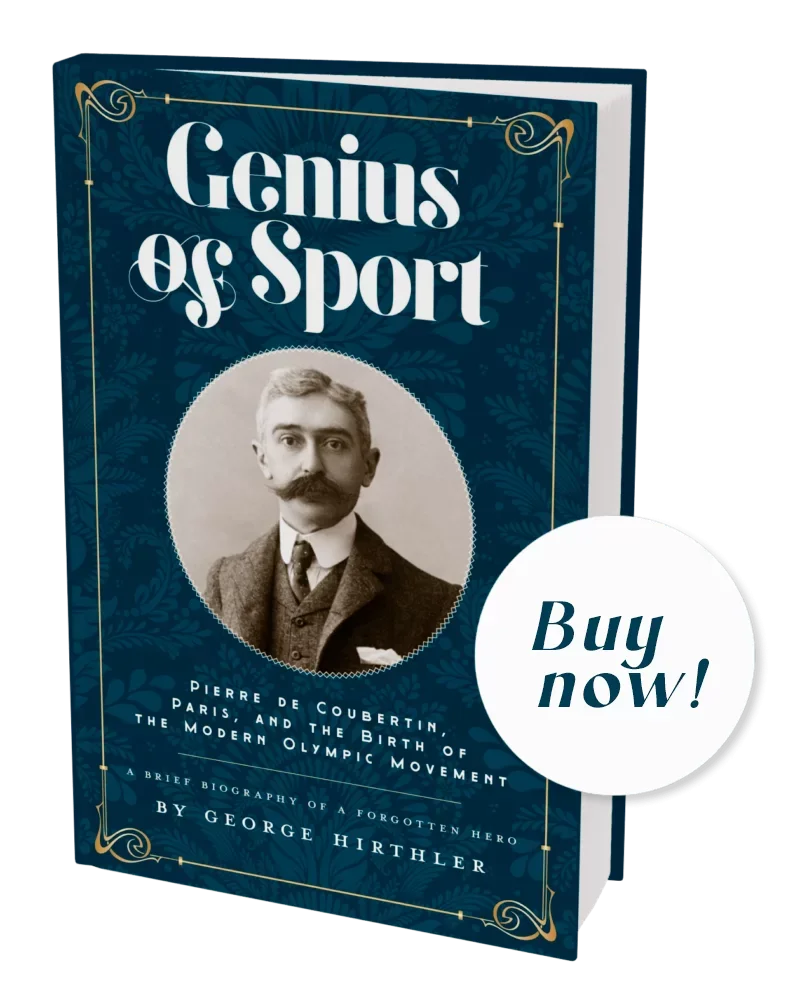
Genius of Sport
Multiplatform storytelling on
the life & legacy of Pierre de Coubertin,
the founder of the Modern Olympic Games
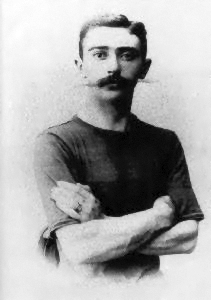
Inspiring a Legacy
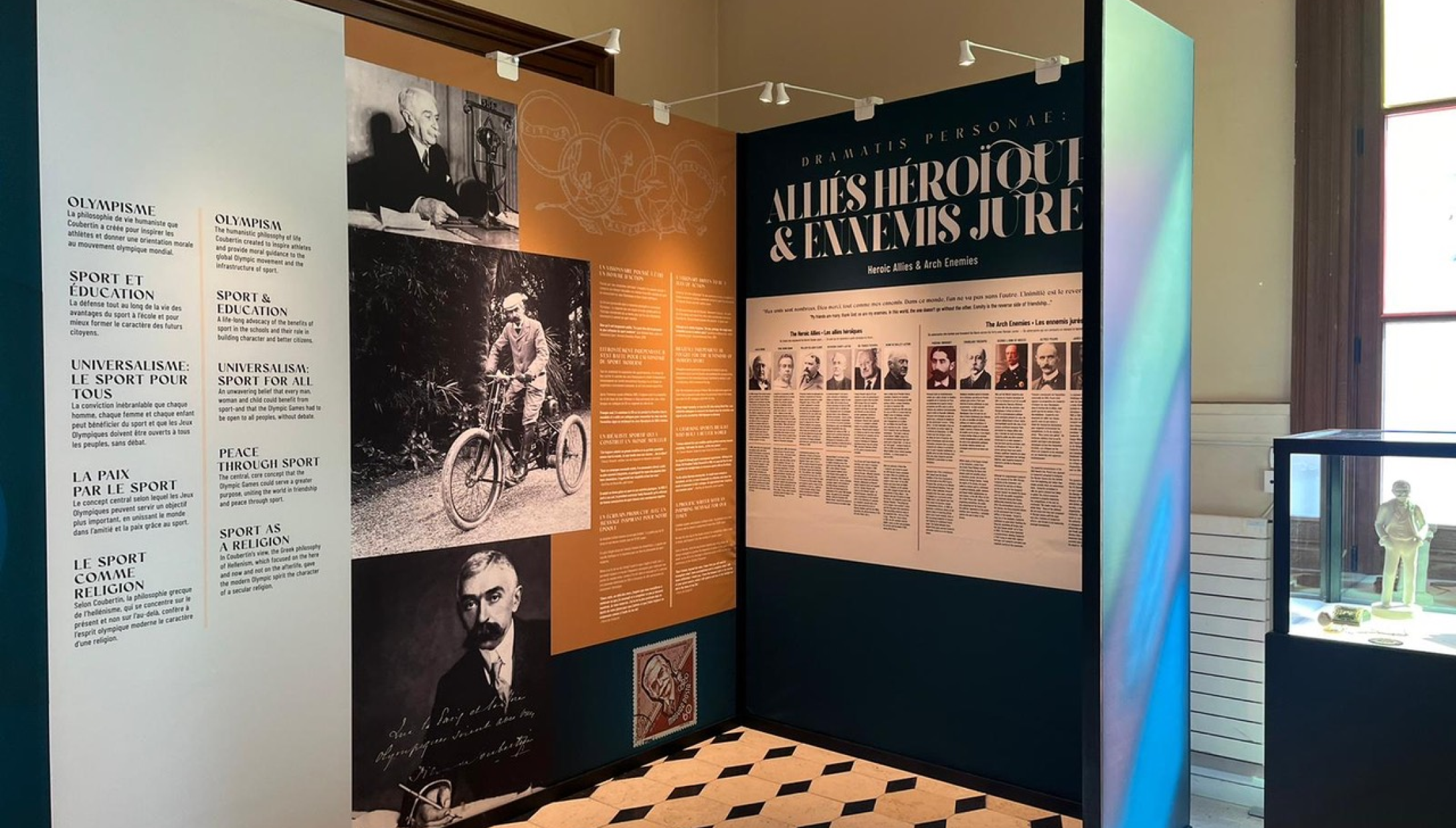
Genius of Sport is a multi-format celebration of Coubertin’s legacy, featuring a book, a traveling exhibit, four brief films, and an upcoming feature-length documentary. The first edition of the Genius of Sport exhibition opened in Paris in the run to the 2024 Olympic Games; the latest edition opened at the United States Olympic & Paralympic Museum in Colorado Springs in May 2026.
The Exhibit
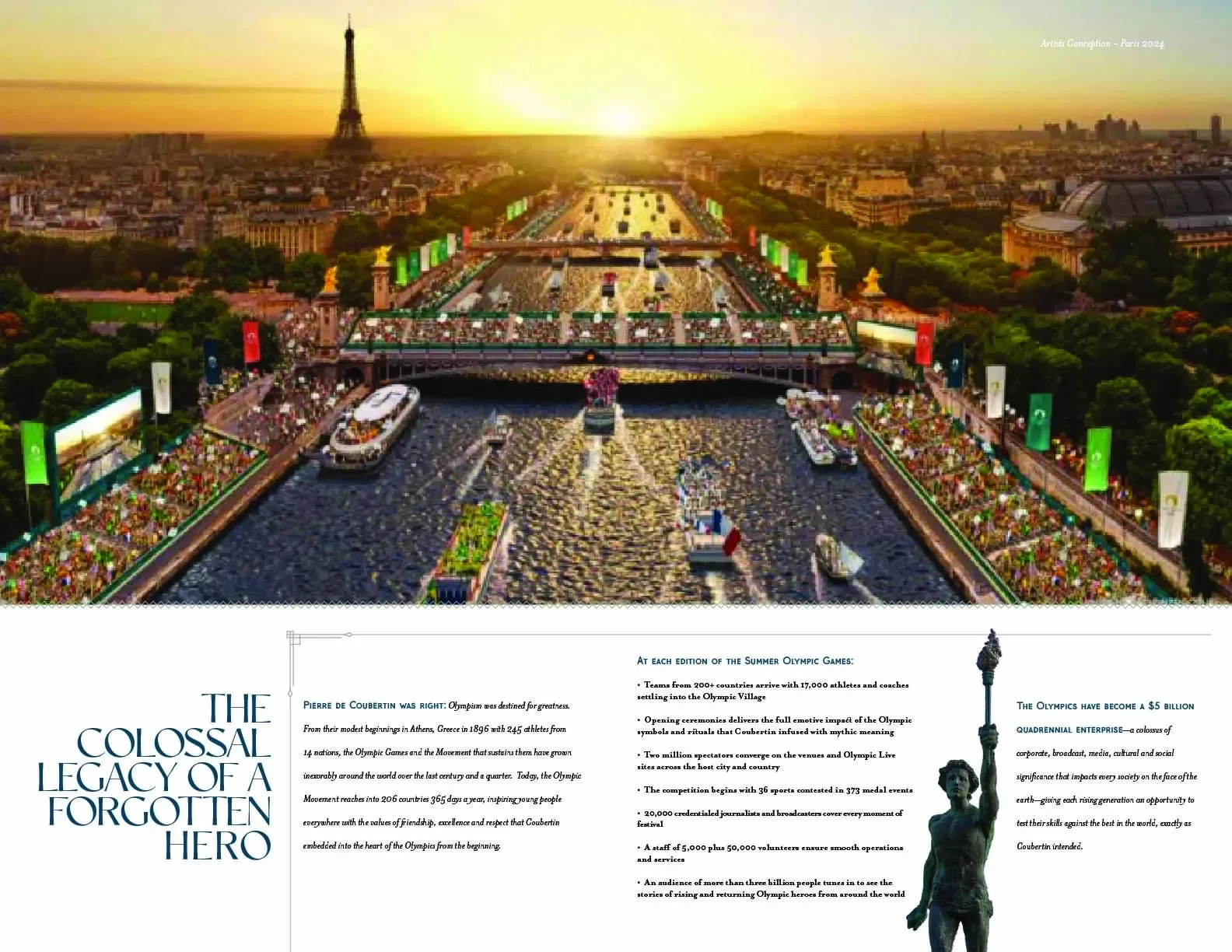
On June 23, 2024—the 130th anniversary of the founding of the modern Olympic Games in the Sorbonne—the Genius of Sport exhibition opened in the City Hall of 7th arrondissement in Paris. Presented by the Coubertin Family Association under the leadership of Alexandra de Navacelle de Coubertin, the exhibit was opened by Rachida Dati, France’s Minster of Culture and the Mayor of the 7th, and Thomas Bach, the President of the International Olympic Committee.
With the primary narrative content created by George Hirthler and designed by Buster O’Connor, the exhibit featured additional contributions by Christian Seychal and Gilles Lecocq. Diane de Navacelle de Coubertin arranged the display of artifacts from the family collection. Christian Seychal and Sylvan Michoux directed the production and installation of the show.
A new edition of exhibit, with an emphasis on Coubertin’s travels in America and the support he gained from US colleges and universities, is now open at the US Olympic and Paralympic Museum in Colorado Springs, CO.
Four Brief Films
These four brief films present four chapters of Pierre’s story—delivered in visually compelling motion graphics—that take you from 1) his school-boy education at the Jesuit School Saint Ignace in Paris, to 2) his years as a Bon Vivant to the vision he had at Rugby, to 3) the Paris 1889 Universal Exposition where he realized the power of global events, and finally to 4) the his launch of the Modern Olympic Movement five years later at the Sorbonne.
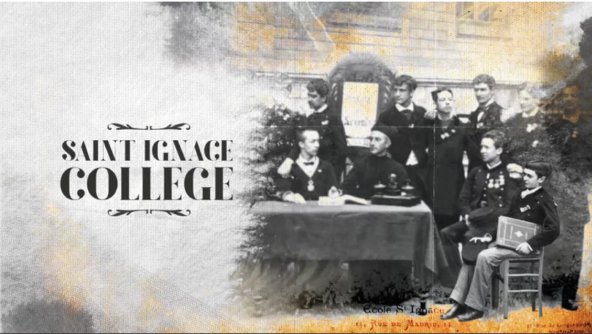
Episode 01
From Saint Ignace to Ancient Olympia
Pierre enters a new Jesuit School and is inspired by the discovery of Ancient Olympia.
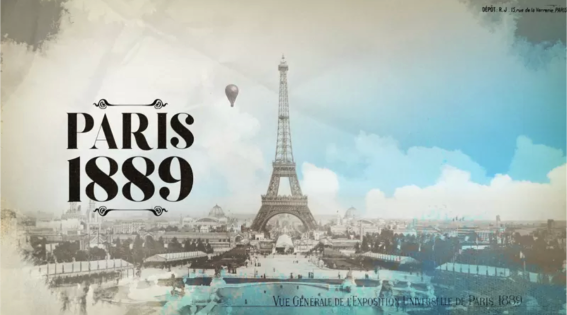
Episode 03
The Paris 1989 Universal Exposition
Pierre sees the possibilities of global events and conducts the Congress on Physical Education at the Expo.
Episode 02
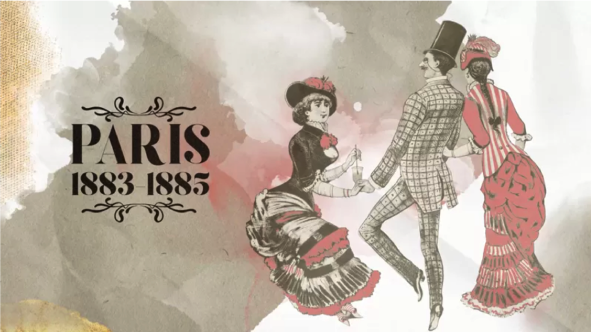
From Bon Vivant to Rugby
Pierre celebrates the Paris social scene and finds his life purpose at Rugby, England.
Episode 04
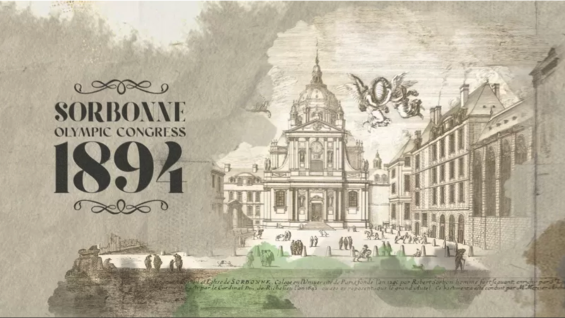
The 1894 Olympic Congress at the Sorbonne
Pierre orchestrates the birth of the Modern Olympic Movement before 2000 people at the Sorbonne.
Biography
PRELUDE
Paris 1894—A Dream of Joyous Hope
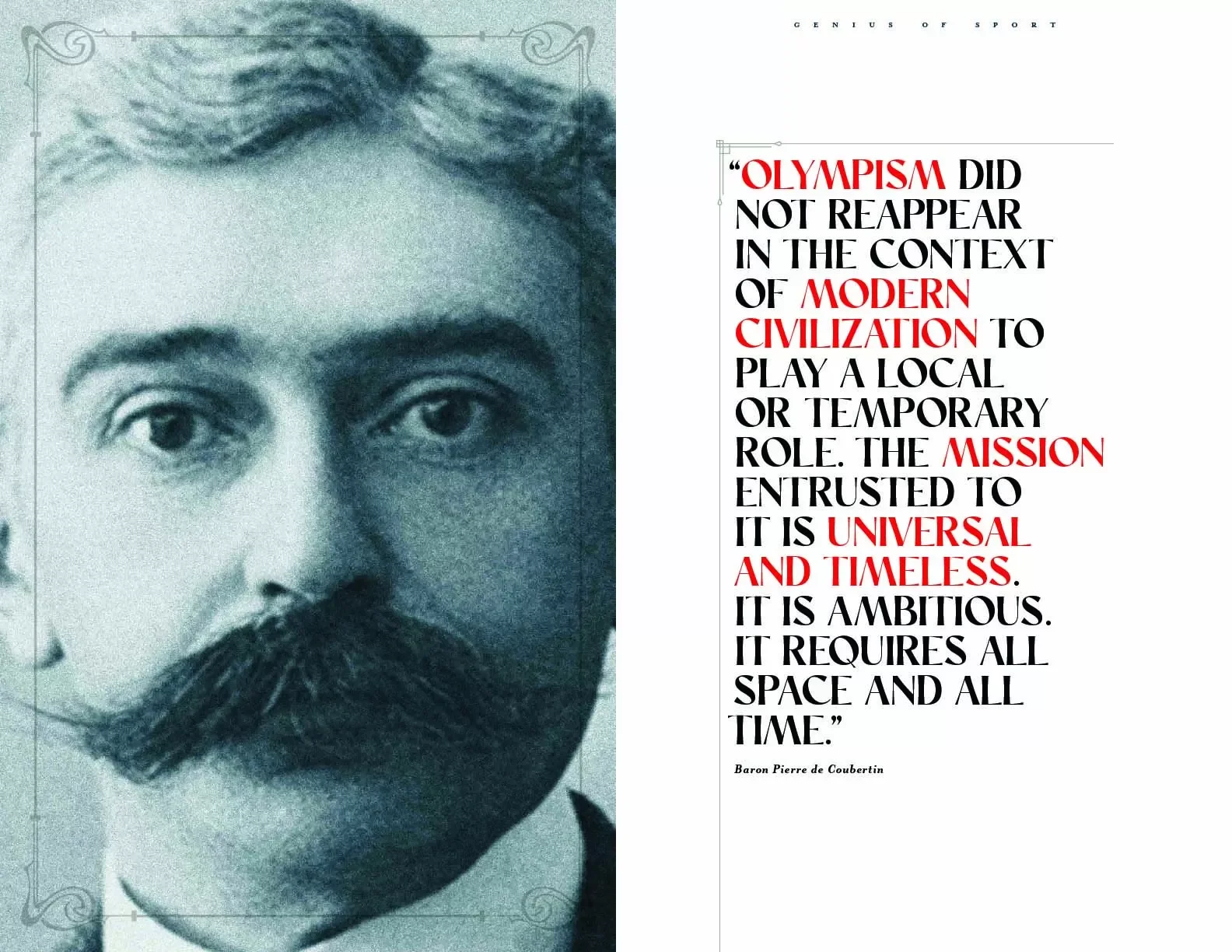
“I lift my glass to the Olympic idea, which has traversed the mists of the ages like an all-powerful ray of sunlight and returned to illuminate the threshold of the twentieth century with a dream of joyous hope.”[i]
On the night of June 23, 1894,
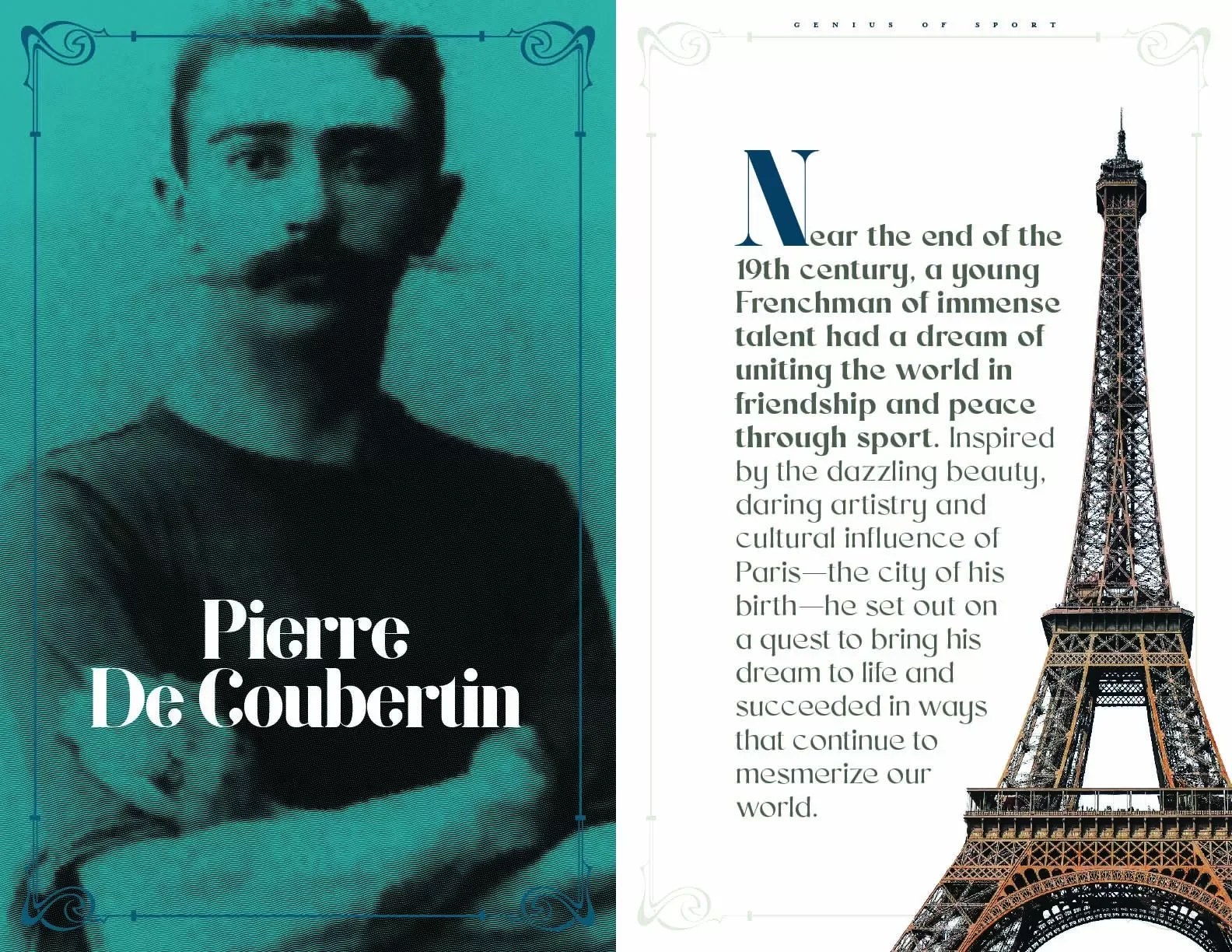
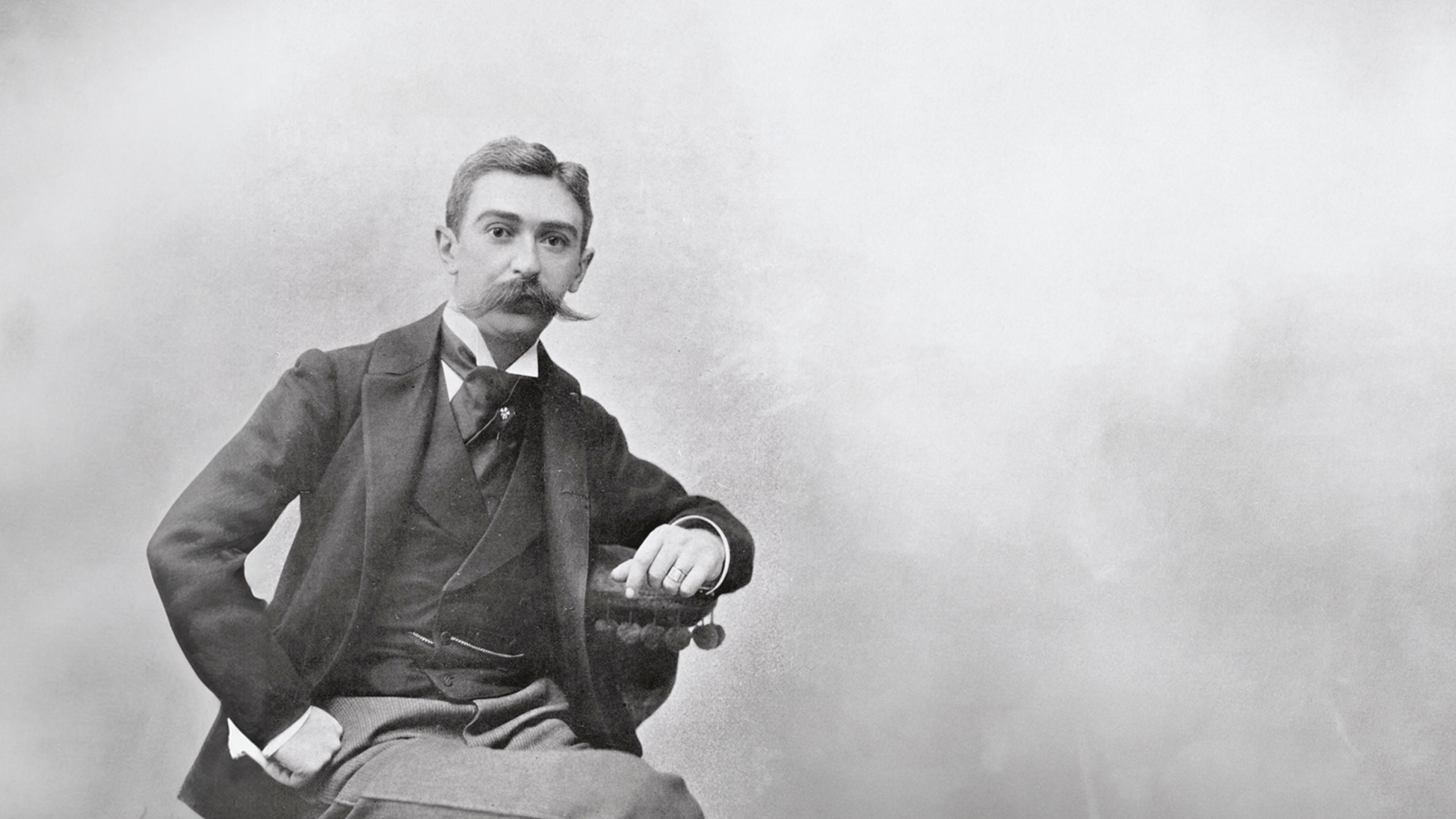
the eighth and final night of the international Olympic Congress in Paris, Baron Pierre de Coubertin raised a toast to his colleagues and thanked them for helping him launch a modern revolution in worldwide sport. On that night, the 31-year-old baron felt he had achieved the impossible. He had succeeded in resurrecting a legendary ancient ritual that had been lost to humanity for more than fifteen centuries. In the euphoria of the moment, he could envision his destiny on a calendar that reached endlessly into the future in four-year cycles, uniting the world in friendship and peace at the Olympic Games.
He could envision a parade of world capitals stepping forward, one after the other, to host his modern festival of youth, starting in Athens in 1896 and returning to his hometown of Paris in 1900. At this final sumptuous banquet at Le Pré Catelan on the shores of Lake Bois de Boulogne, with torch lights shimmering in the water and his fiancée, the lovely and wealthy Marie Rothan, looking at him with eyes full of pride, he took pleasure in the work he had orchestrated. Seven nights earlier, he had rallied an international team of dukes, counts, barons, ministers of state, professors, educators, sportsmen, priests, peace advocates, poets, and musicians to stand with a crowd of 2,000 in acclamation of his Olympic idea in the Sorbonne’s grand auditorium.
Indeed, on the night the baron became the father of the modern Olympic Movement, the future glistened with promise. But like the decade just past, it would be filled with fierce opposition, professional jealously, and an endless struggle that would drain his finances and exact a personal toll that would have crushed most men. Nevertheless, he persevered and managed, with a handful of heroic colleagues, to overcome every challenge and to sustain the Olympics through World War I and into the 1920s, where he, bereft of all resources, finally passed the torch to a younger generation committed to his Movement.
[i] Coubertin: From a speech at the closing banquet of the 1894 Congress of Paris, “Les Fetes du Congres,” in the Bulletin du Comité International des Jeux Olympiques, Paris, July 1894, no. 1, p. 3
The First USPCC Newsletter